


Comparisons between countries often focus on how the quality of goods and services in developing countries is worse than that in richer nations. Why do advanced countries seem to have better things than the rest of the world? We think it’s due to a simple “no-brainer” reason: some countries are just much richer than others. That is the simple yet best way to explain how the US has better infrastructures, or Japan with its public transport, or why Switzerland is so damn expensive.
We know that Indonesia’s living standards remain far behind those of advanced economies. But, examining how Indonesia have progressed over time compared to other nations should provide a clearer perspective on whether it’s growth trajectory has been typical, faster, or slower than expected.
Using GDP per capita, we can now see how Indonesia compares with the advanced countries. Figure 1 shows the 2024 GDP per capita of several advanced economies. The numbers range from the United States, one of the richest countries in the world with a GDP per capita of $84,534, to Japan, another wealthy nation with about $32,487 per person.
To make it concrete, imagine that the average person in the United States earns about $84,534 in a year, while the average Japanese earns around $32,487. Now compare that with Indonesia, where the average income per person is only about $4,925 per year.
Figure 1. GDP Per Capita Comparison of Indonesia to Advanced Countries
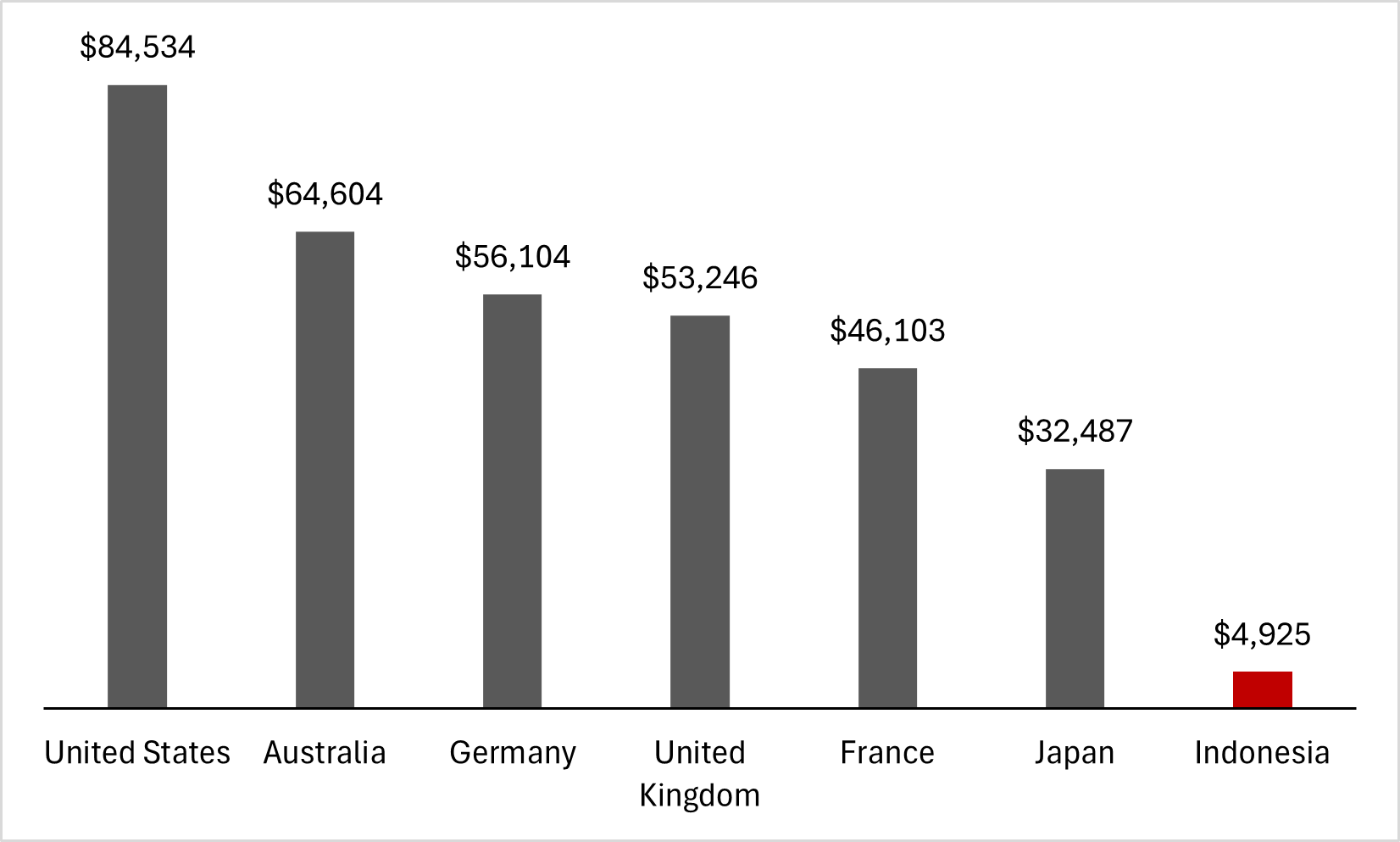
The gap is not marginal. The average American earns roughly seventeen times more than the average Indonesian. While even Japan, with lowest income level among other advanced economies in the figure, has an income per person about six times higher than Indonesia. The United States has more than twice the income per person of Japan. This highlights just how far Indonesia still has to go before reaching that category.
The difference in living standards then should therefore not come as a surprise. These income differences also translate into differences in the nation’s ability to provide public goods for its people. Governments in richer countries can collect far more tax revenue per citizen, allowing them to finance better infrastructure, public services, and social protection systems.
If we compare to countries that started from a similar income level and faced similar development challenges, Indonesia did not exactly win the race either. Figure 2 compares the growth of GDP per capita between Indonesia and several countries that had similar income levels in the past, including China, Vietnam, Peru, and Thailand. In 1985, Indonesia’s GDP per capita stood at around $511. At the time, this figure was actually higher than China ($295) and Vietnam ($238), though still below Peru ($767) and Thailand ($774). However, the trajectories of these countries over the following decades diverged quite significantly.
Figure 2. GDP per Capita Trends of Indonesia and Comparable Economies (1985–2024)
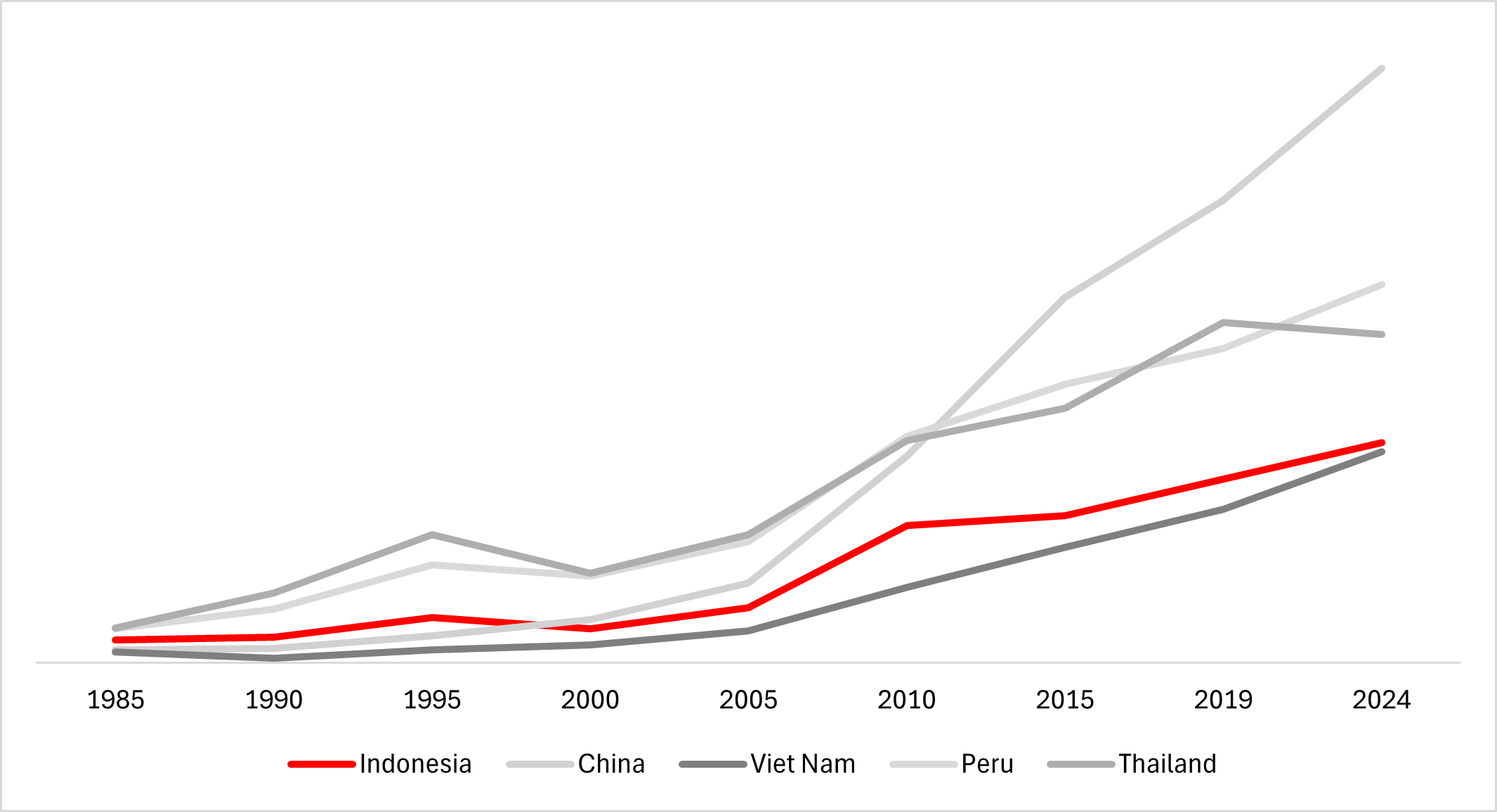
Thailand’s GDP per capita grew from around $774 in 1985 to more than $7,300 in 2024, and Peru increased from roughly $767 to over $8,400 during the same period. Meanwhile, China increased its GDP per capita from just under $300 in 1985 to more than $13,000 by 2024
Of course, Indonesia has also experienced significant growth as well. Its GDP per capita rose from around $511 in 1985 to approximately $4,925 in 2024. This represents nearly a tenfold increase over four decades. But, when placed alongside these comparable countries, Indonesia’s progress appears more stagnant.
Comparisons with countries from similar starting points suggest that Indonesia’s growth, while substantial, has been more moderate than that of some of its peers. Indonesia is progressing. We’re becoming richer, but in a rate slower than those who started poorer. This distinction matters. It should shift our perspective from asking “why is Indonesia poor”, into “what prevented Indonesia from growing at faster rate similar to China, Vietnam, Peru, and Thailand”. And it is a question that Indonesia has yet to answer.