

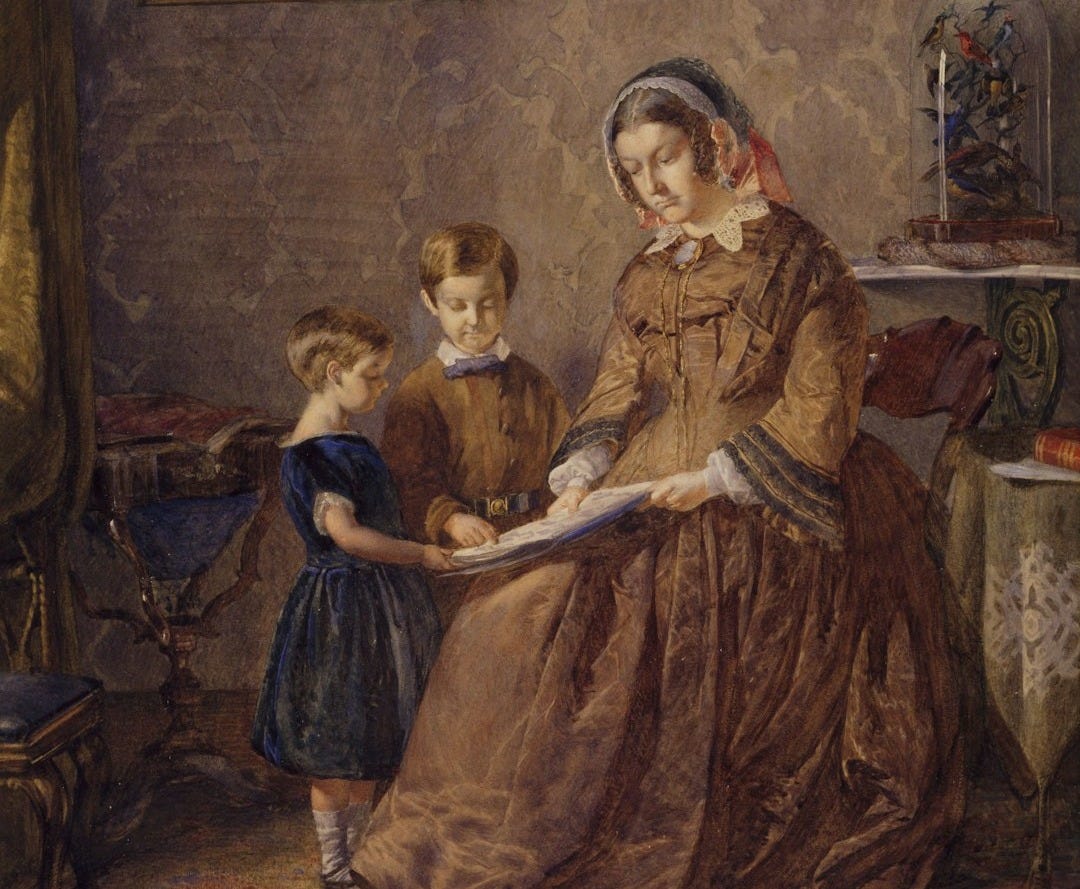
Every parent faces a fundamental dilemma: how much protection is too much? Shield a child too little, and they are left vulnerable to a world they are not yet ready for. Shield them too much, and they never develop the resilience needed to stand on their own. This same tension, between nurturing and overprotecting, sits at the heart of one of the oldest and most contested debates in economic policy: should governments intervene to shape which industries survive and grow, or should that outcome be left entirely to market competition?
The infant industry argument posits that newly established industries should be protected and supported by the government until they are ready to “face the world,” much like how a parent nurtures their child. The idea is straightforward. New industries in developing economies may be inherently uncompetitive in the short run, not because they lack potential, but because they have not yet had the time or conditions to grow.
A young child cannot be expected to compete with adults. Similarly, a newly established domestic steel mill cannot immediately compete with a decades-old foreign conglomerate that has already reaped the benefits of accumulated scale and experience. The logical implication is that some degree of temporary government protection - a parent’s sheltering hand - may be warranted during the formative years. What that protection looks like, how long it lasts, and whether it ultimately produces a thriving industry or a permanently dependent one, is precisely what the debate over industrial policy is about.
What is Industrial Policy?
Industrial policy refers to the range of tools that governments use to deliberately shape what an economy produces, rather than leaving industrial outcomes solely to market forces. One definition explains it as “structural policies designed to strengthen the efficiency, scale and international competitiveness of domestic industrial sectors, typically containing an element of national champions, of self-reliance in bringing about growth and development” (Soete, 2007). It is, in essence, a government’s decision to pick, or at least lean toward, certain industries, activities, or sectors deemed strategically important for national development.
This element of favouritism is, at least on its surface, what has made industrial policy such a controversial topic in economics. It appears to challenge the neoliberal belief in the market’s capacity to determine the best outcome, running counter to the open-market, pro-competition orthodoxy long championed by Western economies, encapsulated in the so-called Washington Consensus (Williamson, 2003), which held that trade liberalization, competition, and investment in human capital would drive growth in developing countries.
The data shows that industrial policy is making a comeback. Business subsidies among upper-middle-income countries now average 4.2 percent of GDP, the highest on record, while a review of national development plans across 183 countries found that every single one targets growth in at least one industry (Fernandes & Reed, 2026). Even the United States, long considered the standard-bearer of free-market economics, has pursued industrial policy under both Democratic and Republican administrations in recent years.
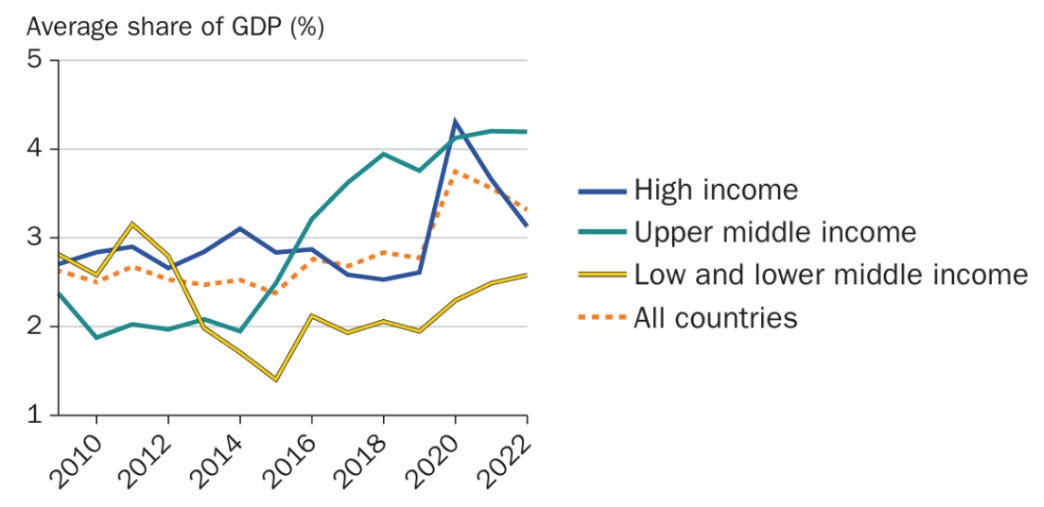
One need not believe in industrial policy to recognize that it is, increasingly, the world’s chosen path. The question worth asking is no longer whether governments should intervene - that debate is effectively being settled by practice, not by economists - but whether they will do it well.
Yet appeal is not the same as success. Whether industrial policy fulfills its promise, nurturing an industry into genuine competitiveness, or instead produces the kind of permanent dependency a parent hopes to avoid, depends entirely on how it is designed and withdrawn.
The Well-Nourished Child: When Industrial Policy Works
Lane’s study of South Korea’s Heavy and Chemical Industry (HCI) drive of 1973–1979 offers one of the clearest empirical tests of the infant industry logic available. The policy’s sharp introduction, and its abrupt termination following the 1979 assassination of President Park Chung-hee, allows for an unusually clean before-and-after comparison of targeted industries. The results were substantial: relative to non-targeted manufacturing sectors, targeted heavy-chemical industries expanded output by more than 100%, with labor productivity more than 15% higher (Lane, 2025). The gains did not stop at the targeted firms themselves; industries downstream of HCI intermediates benefited indirectly through input-output linkages, and these benefits persisted even after the policy ended, with some effects taking years to fully materialize.
This is the well-nourished child in its purest form: the state intervened during a formative period, the support eventually ended, and the industry continued to grow under its own strength rather than collapsing without its parent’s hand. The protection was not permanent, and it did not need to be. It had already done its job.
The Spoiled Child: When Industrial Policy Fails
However, for every well-nourished child, there is always a cautionary counterpart. Not every act of protection ends in independence. Sometimes the sheltering hand that was meant to be temporary never lets go. Not because the parent forgot to withdraw it, but because letting go became harder with each year that passed. The industry grows accustomed to the shelter long before anyone notices it has stopped growing at all. This is the other face of industrial policy.
Argentina’s Tierra del Fuego special incentive regime is perhaps the most telling example of this (Fernandes & Reed, 2026). Established in 1972 to develop local manufacturing in a remote southern province through substantial tax and customs benefits, the regime came with an initial sunset clause set to expire 35 years later, in 2007. By then, the targeted industries had still not become internationally competitive. The result was a concentration of low-value assembly activity, particularly in electronics, with no corresponding development of genuine competitiveness. At an annual fiscal cost of roughly US$1.07 billion, the regime paid for the appearance of industrial activity without the substance of it.
Rather than acknowledging this failure and withdrawing support in 2007, political pressures to preserve employment and regional economic stability led to a series of extensions — first to 2021, then most recently to 2038, with some industry-specific extensions running through 2028. What began as a temporary subsidy has become a permanent structure, with an industry that never learned to compete because it was never asked to.
The spoiled child dynamic operates through two compounding mechanisms. The first is a design failure: firms will always optimize for whatever the subsidy actually rewards, not for what the policy was meant to achieve. In Argentina’s case, that meant chasing sales volume instead of building real competitiveness. The second is political capture. Guaranteed support creates its own defenders — workers, firms, and local officials who benefit from its continuation — and they push back the moment a sunset clause threatens to actually take effect. As Anne Krueger (1974) describes in her theory of rent-seeking, government-created privileges like protected market access give firms an incentive to spend resources defending the privilege itself, rather than competing to deserve it.
Parenting Guidelines: Knowing When and How to Let Go
The evidence does not counsel against industrial policy, rather it counsels against industrial policy pursued without discipline. Effective interventions share several common features: tools are matched to a country’s actual capacity rather than its ambitions; support is directed only at activities with genuine knowledge spillovers, not merely large or politically organized industries; and exit is built in from the start, with performance-linked sunset clauses that prevent permanent dependency. And to have an institution with a capacity to successfully execute these policies (Fernandes & Reed, 2026).
Good parents do not refuse to protect their children. That would be neglect. But good parents also do not protect their children from every difficulty forever, that would be the kind of indulgence that produces adults that are unable to function without assistance. The same is true of industrial policy. The goal is not to shelter domestic industries from international competition forever, but to give them the time, the inputs, the knowledge, and the discipline to become competitive on their own terms. When that goal is kept clearly in view, when support is conditional, termination is planned, and institutions are built for accountability, industrial policy earns its place in the development toolkit. When it is forgotten, the child never grows up. And what began as a nursery quietly becomes a life support machine.