

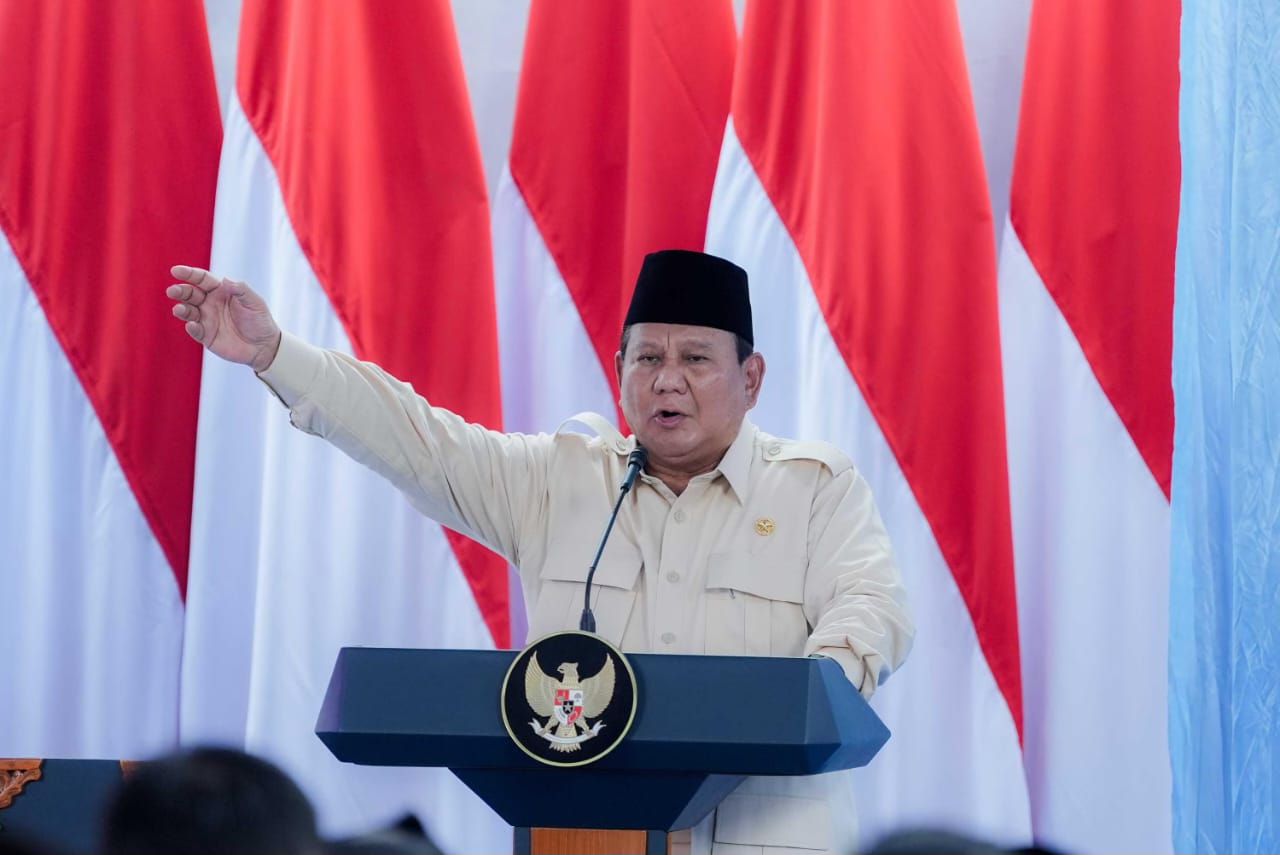
Early in his presidency, Prabowo Subianto announced one of his flagship initiatives: Koperasi Merah Putih. Positioned as an instrument to strengthen national food security, the President aims to mobilize more than 80.000 cooperatives across Indonesian villages. The initiative was formally launched on the 12th of July 2025.
The idea of cooperative-based economics has long been debated in the Indonesian development agenda. Historically, ideas of cooperatives gained national momentum after Indonesia’s independence in 1945. Amongst many of its advocates, the first vice president of Indonesia, Mohammad Hatta, strongly believed in cooperatives as a suitable foundation of Indonesia’s economic progress. In his studies, such as “Cooperatives in Indonesia” and “Cooperatives and the People’s Economy”, he argued that cooperatives would be a fitting vehicle to foster rural development by providing small farmers more authority over their economic future.
However, cooperatives gradually became one of the sources of national divide in the 1960s. They were viewed as increasingly politicized and were often pressured to support certain parties. Thus, once viewed as an indispensable foundation to Indonesian economic development, cooperative ideas became increasingly contested.
The slowdown continued after the presidency of Soekarno. In an attempt to further curb left-wing political influence, Soeharto’s regime further dismantled cooperative ideas, resulting in a significant drop in the number of cooperatives from 1966 to 1967. Existing cooperatives were then replaced with Koperasi Unit Desa (KUD) and were often viewed as a top-down initiative to increase the central government’s presence in rural areas. Such an approach effectively differed from the core principle of 1945’s cooperatives by detaching itself from the pillars of autonomy and independence.
Cooperative ideas regained momentum in the post-1998 period due to numerous economic stimuli from the newly formed government. Consequently, the number of cooperatives increased dramatically from 1998 to 2001. Nevertheless, it is evident that many cooperatives in this period were mostly inactive and heavily dependent on the central government. Over the period of 2019 to 2024, the government stated that a substantial number of cooperatives, reaching 82.000 units, have been disbanded due to inactivity.
The beginning of Koperasi Merah Putih marks a new chapter for Indonesian cooperatives. In his statements, Prabowo firmly asserts the cooperative’s role as a tool to level the playing field for weaker economic agents. Particularly, he highlighted the significant role that cooperatives will play in increasing value chain efficiency and food sovereignty. Thus, with such an agenda, Prabowo effectively reintegrates the role of cooperatives into the Indonesian development blueprint, a renewed attempt to revive cooperative-based economic thinking.
Despite the second wind, staggering differences in principles between Koperasi Merah Putih and the cooperative idea from 1945 quickly became a source of scrutiny. Koperasi Merah Putih utilizes the Central State Budget as its main source of funding. Funding is also supported by the Village Fund, the Regional State Budget, and People’s Business Credit (KUR). Furthermore, Koperasi Merah Putih involved several state-owned enterprises, including Bank Rakyat Indonesia (BRI), Bank Mandiri, Bank Nasional Indonesia (BNI), Bank Syariah Indonesia (BSI), and the State Treasury Service Office (KPPN) to distribute state funding. The State Treasury Service Office also assumes additional responsibilities, including monitoring, evaluating, and digitalizing transactions.
This evidence highlights the centralized nature of Koperasi Merah Putih’s financing architecture, sharply contrasting the autonomy-based cooperative ideal of 1945. Not to mention, several human capital constraints emerged due to managerial, financial literacy, and monitoring issues amongst its members. In consequence, several human capital development programs were employed by enrolling cross-sectoral organizations.
Thus, with such contrast, many began to question the basis of Koperasi Merah Putih as a substantive development initiative, or whether it is a form of recycling flawed historical cooperative models under renewed political rhetoric. Rather than incentivizing the growth of cooperatives through a bottom-up policy mechanism, the government has chosen a sweeping, centralized program under a single national framework. This places considerable pressure on the state institutions to nurture, monitor, and ensure the effectiveness of Koperasi Merah Putih. Furthermore, this decision reveals the structural differences in the institutional approach taken by autonomous, community-driven cooperatives and the centralized model of cooperatives, while placing a substantially higher administrative burden on responsible ministries and SOEs.
Past studies have scrutinized the form of cooperatives and its conditionalities. Referencing cross-country comparison, Hans Hansmann, in his book “The Ownership of Enterprise,” underlines that in the early 1970s, cooperatives were able to acquire a substantial amount of market share amongst developed countries. Particularly in Europe, cooperatives have accounted for 45 percent of the total agricultural share in France, 48 percent in Germany, 60 percent in the Netherlands, 70 percent in Denmark, and 80 percent in Sweden. Evidently, cooperatives have been successful in incentivizing farmers to effectively negotiate, or to some extent, displace middlemen. By removing monopsonistic agents, cooperatives have also displayed an unambiguous improvement in social welfare. Additionally, Hans Hansmann underlines reasonings that include overcoming asymmetric information and risk bearing as a stimulus for the formation of cooperatives.
A foundational characteristic of cooperatives is a high degree of interest homogeneity amongst its members. This alignment allows collective decision-making without imposing a disproportionate burden on members based on shared decisions. Interest alignment is essential, as it reduces internal conflict and ensures members share similar incentives. In addition, capital is primarily raised from the cooperatives’ members, while external borrowing is utilized as a supplement to collective contributions.
Although external borrowing is acknowledged as an employable form of capital raising for cooperatives, Hansmann underscores in his study that the majority of equity capital in his observed cooperatives is raised from members. For a farmer-owned enterprise, liquidity constraints are evidently much less important than initially expected. In addition, he highlighted that most successful cooperatives have often carefully designed methods to raise capital, adhering to the principle of independence. Therefore, his findings suggests that accumulation of capital is not, and should not, be the most important barrier for effective cooperatives.
Another study by Uma Lele, titled “Co-operatives and the Poor: A Comparative Perspective,” also highlights several additional conditionalities for effective cooperatives. She argues that human capital qualities such as leadership, management capability, experience, and technical competence deserve greater emphasis in building functional cooperative institutions. Furthermore, she contends that external policies related to agricultural pricing, input distribution, technology, infrastructure, and regulatory frameworks must first be improved to ensure meaningful grassroots participation and reduce the dominance of rural political elites.
Ironically, the current institutional design of Koperasi Merah Putih risks repeating the same problem as past cooperative programs. Historically, a centralized intervention, whether in the form of a KUD or extensive subsidy, largely results in dysfunctional cooperatives. That is, an administratively present but functionally dormant institution.
When cooperatives emerged not from the genuine collective interest, but were dominated by a uniform national instruction, they tended to weaken leadership, cripple the internal cohesion, and lack a uniform incentive. Without a strong foundation for local ownership and internal capability, Koperasi Merah Putih will only be the government’s vehicle to channel credit, without adding much value to productivity and farmers’ autonomy. Thus, with such a scheme, the enormous financial and administrative burden in regard to human quality and institutional development will be placed on cross-sectoral organizations, which have shown a disappointing result in the past.
In response, greater emphasis should be placed on enacting incentivizing policies that allow cooperatives to grow organically. Rather than creating thousands of top-down institutions, the government should focus on increasing the attractiveness of cooperatives by removing the structural barriers that prevent them from functioning effectively. Regulatory improvements related to pricing, input distribution, technology, and infrastructure are essential to creating a supportive environment for cooperative activity. In addition, strengthening human capital through leadership training, managerial development, and technical capacity should be prioritized to stimulate genuine grassroots initiative and increase meaningful participation within cooperatives.
All in all, the success of Koperasi Merah Putih should not be measured by sheer numbers, but by whether it aligns itself with the institutional principles that enable cooperatives to flourish. If these lessons remain unaddressed, Koperasi Merah Putih risks becoming yet another well-intentioned program that fails to create substantial change. By prioritizing autonomy, improving regulatory conditions, and strengthening human capital, the government can not only encourage the development of effective cooperatives but also assess whether this initiative is a meaningful path toward rural empowerment. Whether Koperasi Merah Putih ultimately embodies this opportunity or risks becoming a well-intended backfire, remains an open question that the government must urgently confront.