

Equality has become a subject for debate amongst economists. Many had argued against its importance, underlining a trade-off towards growth. And even within the group that acknowledges its significance, debate on how equality should be defined and addressed persists.
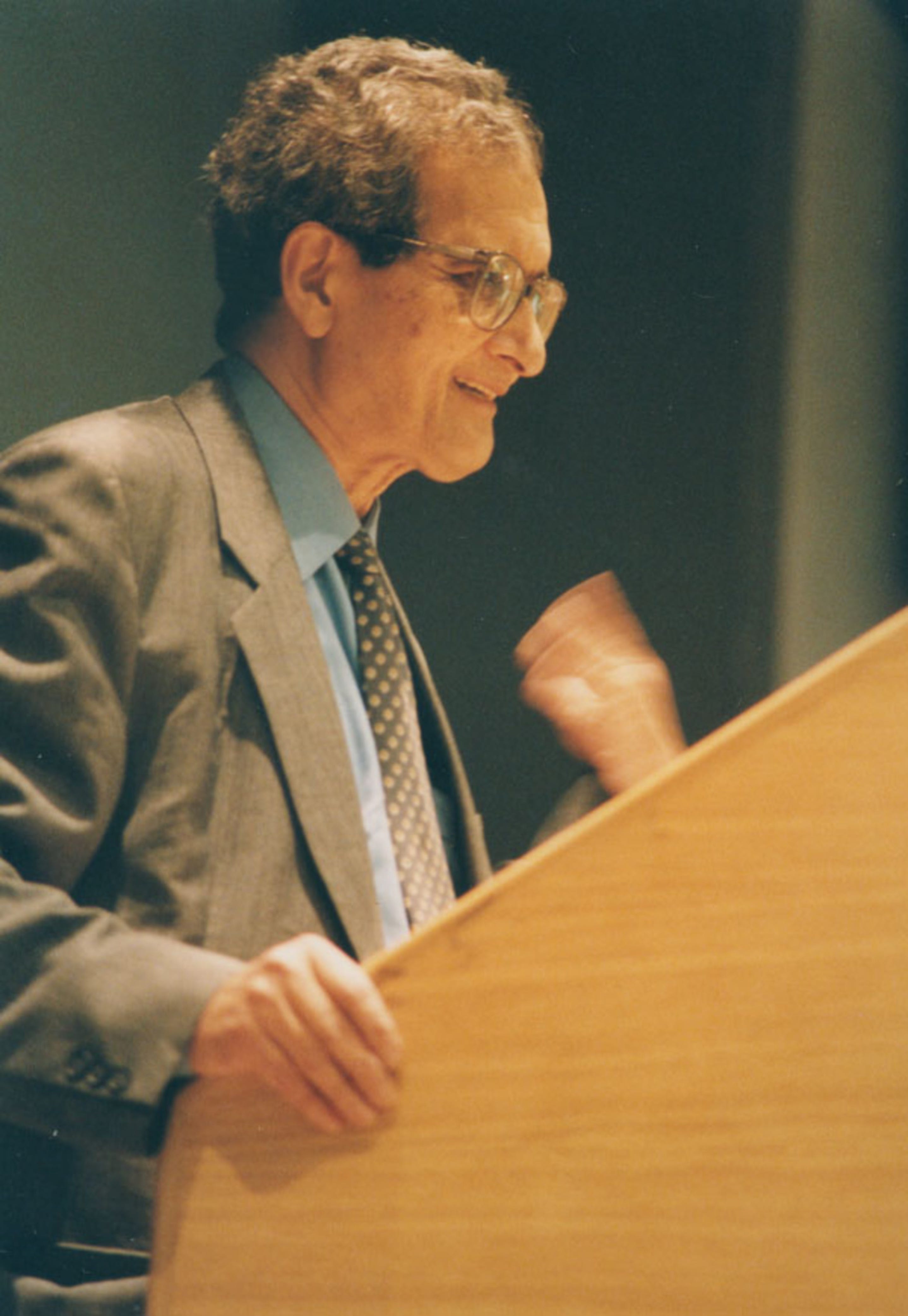
Amartya Sen provides a framework that attempts to encompass prominent equality-preferring ideas. Sen (1979) advances the definition of equality by inserting capabilities and functioning theory, and argues that neither Utilitarianism nor Rawlsianism have yet sufficiently captured the potential discrimination endured by certain individuals. He attributes the impact of individual circumstances and needs on income distribution, defining its concept as basic capability equality (Sen 1979, p. 217).
Sen illustrates this by providing an example of the potential discrimination endured by disabled individuals. He argues that Utilitarianism and Rawlsianism would put them at a disadvantageous position, stating that they will begin life with a low initial level of total utility (Sen 1979, p. 217). He addresses the importance of a framework to capture “basic capabilities”, highlighting aspects such as the ability to move, nutritional needs, clothing, sheltering, and social participation as a baseline that needs to be acknowledged for every individual (Sen 1979, p. 218).
He views that Rawlsianism’s strict focus on primary goods will limit the understanding of equality by only emphasizing the obtainment of goods, rather than evaluating how these goods will affect the condition of human beings. He states that the concept of basic capability equality would extend the idea of Rawlsianism by shifting the focus from obtaining goods to understanding what these goods will do to the individuals (Sen 1979, p. 219). For Utilitarianism, he argues that such a perspective will only focus on how these goods affect the mental reaction of human beings rather than on individual capabilities. Thus, with Utilitarianism and Rawlsianism, allocating resources to such individuals is baseless due to the lack of a marginal utility argument (expensive), total utility argument (because he is contented), or primary goods deprivation (because he has goods others have) (Sen 1979, p. 218). With basic capabilities, however, the understanding would be more complete due to an agreement on a baseline on individual equality.
Sen extends his framework by integrating the concept of basic equality into the ends and means of development. He asserts that beyond the metric of growth, the primary objective and means of development should be oriented towards the enhancement of human freedom (Sen 1999, p. 53). He argues that the instrumental roles concerning economic facilities, political freedoms, social opportunities, transparency, and security should be arranged to enhance individual capabilities and promote individual self-sufficiency and autonomy (Sen 1999, p. 53). Consequently, Sen maintains the position that the state should act as a safeguard of such institutional arrangements, and believes that such an equitable structure requires a certain degree of equality between individuals.
Most notably, he identifies poverty as a hindrance towards achieving human freedom. He acknowledges poverty and inequality as a result of conditional variations and states, and that income and capability will also be strongly affected by factors over which a person has limited control over. Sen identifies aspects such as gender, social roles, innate disabilities, geographical factors, and endemic diseases as examples (Sen 1999, p. 88). He highlights that relative income deprivation can create an absolute capability deprivation (Sen 1999, p. 89). Thus, he believes that the paradigm of capability will increase our understanding of the causes of poverty, deprivation, and inequality (Sen 1999, p. 90).
Rather than identifying inequality as a final goal of institutional arrangements, he reframes its existence, along with other metrics such as growth, as a signal to be operationalized for the achievement of an absolute target: the enhancement of human freedom. He posits that economic inequality will inevitably impose a limitation towards it. Accordingly, not only does he provide a robust philosophical baseline that underlines the importance of tackling inequality, but he also accommodates other metrics, such as growth, as a factor of human freedom.
However, Sen himself admits that the capability and functioning theory is not fully defined. Particularly, he did not evaluate the problems regarding distribution and how it relates to capability theory (Robeyns and Byskov 2020). Thus, having to redefine what it means to be equal, the operationalization of his ideas is relatively limited.
Nevertheless, Sen’s idea lays the foundation to rethink of what it means to be equal. His approach not only addresses the limitations of Utilitarianism and Rawlsianism towards conceptualizing equality, but also anticipates the potential discrimination by equality-based approaches, a framework that acknowledges the intrinsic value of individual capabilities despite uneven extrinsic consequences.