

Indonesia has actively advanced its digital inclusion agenda to address poverty. This effort is aligned with government initiatives, such as the 2016 National Strategy for Financial Inclusion (SKNI) and Bank Indonesia’s 2019 QRIS framework. In the Indonesian context, digital financial services are seen as a complement to traditional finance, particularly where formal institutions are lacking (Kelikume, 2021).

However, a growing body of empirical research has increasingly been challenging the positive linear assumption between poverty alleviation and digital financial inclusion. Several empirical studies have proven that there is a non-linear U-shaped relationship between poverty alleviation or factors that indirectly impact poverty alleviation, and digital financial inclusion initiatives (Lee et al. 2023). Studies also have shown that digital financial inclusion can directly, indirectly, or spatially influence the economic development of a region (Lee et al. 2023).
In Indonesia, numerous studies have explored the link between digital financial inclusion and poverty, although the conclusions are not always consistent. Amaliah et al. (2024) demonstrated that digital access, via ATMs and debit cards, has a notable positive influence on economic growth and poverty reduction. Khoirunurrofik and Fitriatinnisa (2021) identified a non-linear, U-shaped pattern between financial inclusion and poverty/inequality, suggesting that while inclusion initially reduces poverty, there may be negative effects at early stages of adoption due to digital exclusion. As usage increases beyond a certain point, the benefits re-emerge. Ariansyah et al. (2023) observed a reverse U-shaped association between broadband access and income inequality, initial coverage expansion increased inequality up to 60% penetration, then helped reduce it afterward.
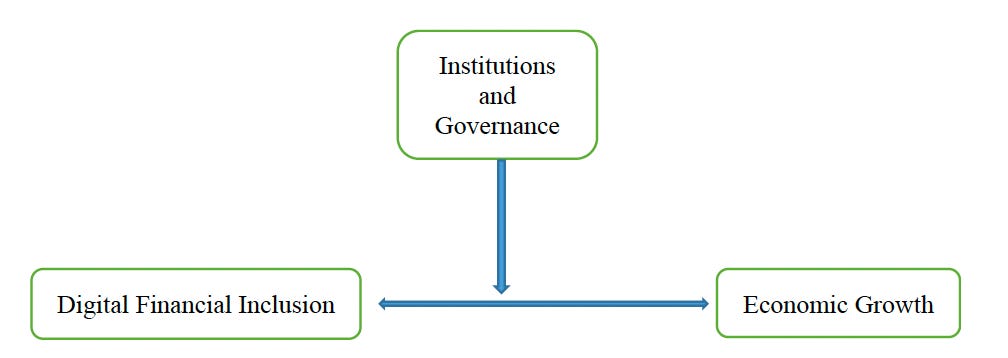
These evidence shows that digital financial inclusion has a clear effect on the poverty. However, such non-linearity underscore the conditionality of digital financial inclusion on poverty alleviation. This essay underlines the importance of institutional factors in promoting the effectiveness of digital financial inclusion initiatives on poverty alleviation.
Studies have highlighted the impact of institutional challenges on such non-linear relationship. Ozili (2020) found that fintech providers, prioritizing profitability, often offer services misaligned with poor households’ needs, introducing costly micro-loans with high interest rates that mirror traditional microfinance pitfalls. These issues highlight institutional failures (inadequate regulation and consumer protection), and behavioral factors (low trust and limited literacy) that can worsen poverty if not addressed. Effective digital financial inclusion requires complementary institutional and behavioral interventions to prevent adverse outcomes (Lee et al. 2023).
A growing body of literature argues that institutions determine whether digital financial inclusion translates into meaningful economic gains. Governance quality, regulatory capacity, consumer protection, and educational systems influence how individuals interact with digital financial services. Studies by Aracil et al. (2021), Guo & Zhong (2023), and Chinoda & Kapingura (2024) consistently find that stronger institutions amplify the positive effects of digital financial inclusion, while weaker institutions can undermine or even reverse them.
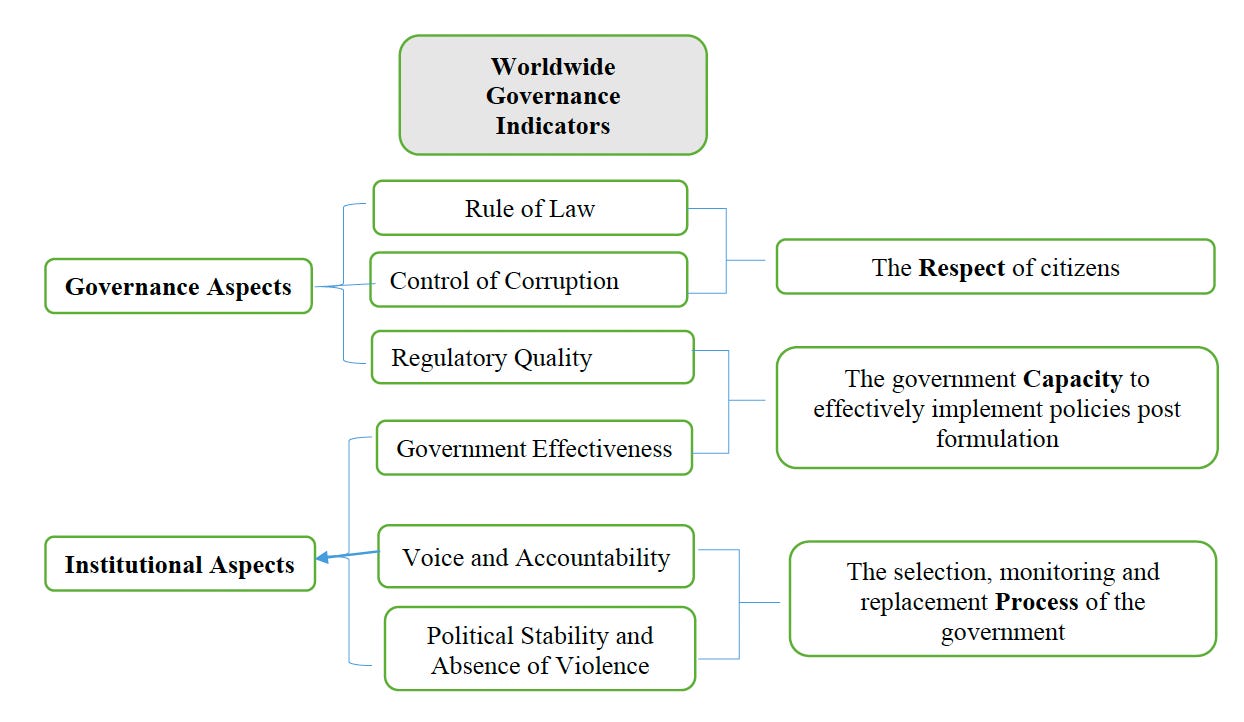
Other researchers have turned their attention to the role of educational institutions in promoting entrepreneurial skills and financial literacy as tools for poverty reduction. Morgan & Trinh (2019) and Cupák et al. (2021) found that education, particularly at the secondary level, is a key factor in developing financial capabilities. They also highlight the critical mediating function of educational institutions in enhancing the impact of digital financial inclusion on poverty alleviation.
These findings suggest that the success of advancing digital financial inclusion is contingent on institutional factors. Institutions play an important role due to their influence on the acceptability, implementation, and monitoring of digital financial inclusion initiatives.
Within Indonesia, such evidence highlights the importance of strengthening the underlying institutional foundations capable of implementing policy initiatives effectively. Without sufficient institutional support, digital financial inclusion initiatives can backfire, limiting both the accessibility and effective use of digital financial technologies, while potentially increasing existing inequalities.
Bibliography
Amaliah, I., Ali, Q., Sudrajad, O.Y., Rusgianto, S., Nu’man, H. and Aspiranti, T. (2024) ‘Does digital financial inclusion forecast sustainable economic growth? Evidence from an emerging economy’, Journal of Open Innovation: Technology, Market, and Complexity, 10(2), p. 100262. Available at: https://doi.org/10.1016/j.joitmc.2024.100262.
Aracil, E., Gómez-Bengoechea, G. and Moreno-de-Tejada, O. (2022) ‘Institutional quality and the financial inclusion-poverty alleviation link: Empirical evidence across countries’, Borsa Istanbul Review, 22(1), pp. 179–188. Available at: https://doi.org/10.1016/j.bir.2021.03.006.
Ariansyah, K., Barsei, A.N., Syahr, Z.H.A., Sipahutar, N.Y.P., Damanik, M.P., Perdananugraha, G.M., Dunan, A., Nupikso, D., Darmanto, Hidayat, D., Mudjiyanto, B., Hermawati, I. and Suryanegara, M. (2023) ‘Unleashing the potential of mobile broadband: Evidence from Indonesia’s underdeveloped regions on its role in reducing income inequality’, Telematics and Informatics, 82, p. 102012. Available at: https://doi.org/10.1016/j.tele.2023.102012.
Chinoda, T. and Kapingura, F.M. (2024) ‘Digital financial inclusion and economic growth in Sub-Saharan Africa: The role of institutions and governance’, African Journal of Economic and Management Studies, 15(1), pp. 15–30. Available at: https://doi.org/10.1108/AJEMS-09-2022-0372.
Cupák, A., Fessler, P., Silgoner, M. and Ulbrich, E. (2021) ‘Exploring differences in financial literacy across countries: The role of individual characteristics and institutions’, Social Indicators Research, 158(2), pp. 409–438. Available at: https://doi.org/10.1007/s11205-021-02713-8.
Guo, X. and Zhong, S. (2023) ‘Unintended consequences: How does digital inclusive finance affect migrants’ urban settlement intentions?’, International Review of Financial Analysis, 89, p. 102766. Available at: https://doi.org/10.1016/j.irfa.2023.102766.
Kelikume, I. (2021) ‘Digital financial inclusion, informal economy and poverty reduction in Africa’, Journal of Enterprising Communities: People and Places in the Global Economy, 15(4), pp. 626–640. Available at: https://doi.org/10.1108/JEC-06-2020-0124.
Khoirunurrofik and Fitriatinnisa, D. (2021) ‘Financial inclusion, poverty, inequality: Empirical evidence from provinces in Indonesia’, Economics Development Analysis Journal, 10(2), pp. 159–174.
Lee, C.C., Lou, R. and Wang, F. (2023) ‘Digital financial inclusion and poverty alleviation: Evidence from the sustainable development of China’, Economic Analysis and Policy, 77, pp. 418–434. Available at: https://doi.org/10.1016/j.eap.2022.12.004.
Morgan, P.J. and Trinh, L.Q. (2019) ‘Determinants and impacts of financial literacy in Cambodia and Vietnam’, Journal of Risk and Financial Management, 12(1), p. 19. Available at: https://doi.org/10.3390/jrfm12010019.
Ozili, P.K. (2020) ‘Contesting digital finance for the poor’, MPRA Paper No. 101812. Munich: University Library of Munich.