

In the 21st century, a democratic form of governance has been championed. Recent studies have backed its role in increasing the effectiveness of our economic and political institutions. Acemoglu & Robinson (2013) provided the foundational work for this notion, categorizing institutions as inherently inclusive or extractive. They provided a historical analysis of institutional dynamics and their consequences, and concluded that long-run economic growth could only be achieved through an inclusive political and economic institutional framework.

Acemoglu et al. (2004) solidified the claim of institutions as a long-term determinant of growth. Operationalizing the European settler’s mortality rates as an institutional proxy, they empirically supported the significant role of inclusive institutions in promoting sustainable economic growth (Acemoglu et al. 2001). They later provided empirical evidence for democracy as a foundation for growth, highlighting that democratization has increased long-run GDP per capita by 20 percentage points (Acemoglu et al. 2019).
Effectively, it showcases an integrated structure between institutions as a vehicle to initiate growth and democracy as its ideological foundation. It manifested in the form of a governance system, backed by theoretical rationale and empirical evidence.
The World Bank (2017) supported this premise. Classifying governance as “rules-based” and “deals-based” bargains, it asserts the importance of inclusivity to ensure prolonged economic development. The “rules-based” system, which emphasized accountability, equitable power distribution, and a less personalized form of governance, is claimed to be a more sustainable political and economic structure. Particularly, it advocates the predictability and adaptability of such a system to ensure effective transition and long-term consensus for the rules of governance.
Other scholars have taken alternative approaches to support the finality of democracy. Sen (2013) argued for the intrinsic value of democracy. He affirmed the role of political, economic, and social freedom as instruments of growth. Aligned with the idea of inclusive institutions and “rules-based bargains”, he stated the importance of transparency and protective security as necessary tools to sustain growth.
However, China, Rwanda, and Singapore raises questions about the generalization of democratic institutions as the sole mechanism for sustainable growth. These countries have distinct historical and sociological characteristics. Rwanda is a former Belgian colony. The colony categorized Hutu and Tutsi into distinct racial and hierarchical identities that resulted in a long-standing resentment between the two factions. The conflict culminated in 1994, when roughly 800,000 Tutsi were massacred by the ruling Hutu, driving most of them into exile in Uganda.
Paul Kagame, a Tutsi, led the Rwandan Patriotic Front (RPF), which ended the genocide during the same year. His military intervention is seen as a successful initiative to bring stability to the region. In 1998, Paul Kagame became the president of the RPF, and then became the national president in 2000. He has ruled since.
His governance is full of contradictions. Although he was successful in stabilizing Rwanda’s political and economic environment, the regime that followed is unambiguously authoritarian. Opposition is often suppressed and political opponents imprisoned. Already ruling for more than 20 years, his last election in 2024 still resulted in him winning 99% of the total votes (Kupemba 2024).
Despite such conditions, Rwanda’s economic performance excelled. From 1994 to 2024, Rwanda’s average GDP per capita growth reached a substantial value of 4.85%. With such an average, Rwanda has not only surpassed the economic performance of its neighbours, but also that of most countries in the world. Referenced from the World Development Indicator, the average GDP per capita growth from 1994 to 2024 has only reached 1.02% in Sub-Saharan Africa, -0.04% in Central Africa, 0.7% in Southern and Eastern Africa, and 1.8% in the world. Furthermore, control of corruption in Rwanda has been one of the best performing, showcasing a value of 0.67 in the World Bank’s Control of Corruption Estimate Index.
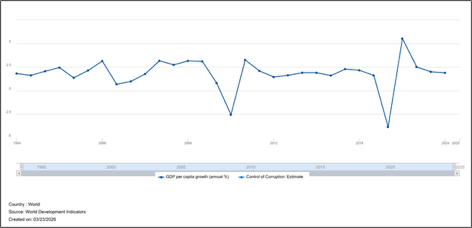
Figure 1 World’s GDP per capita growth (1994-2024)
Source: World Development Indicators (n.d.)
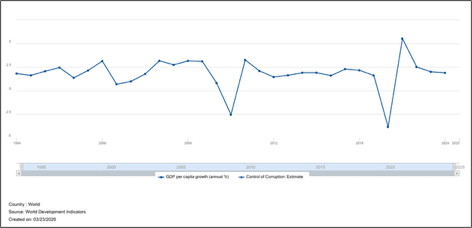
Figure 2 Rwanda GDP per Capita Growth (1994-2024)
Source: World Development Indicators (n.d.)
If Rwanda became a significant exception to a democratic form of governance, China and Singapore scaled it by multitudes. Both are considered economic miracles of the 20th century. They have a centralized approach to political governance and experienced a sustained economic growth at an unprecedented level.
China has existed for millennia. It is one of the largest by region and the most populous in the 21st century. At one point in history, they dominated the global landscape. They had significant transformations over the years, experiencing multiple cultural and political revolutions. From the era of the Han dynasty, to the golden age of the Ming and Qing, to the period of modern communist China, they have endured. Thus, unlike Rwanda, they are a wounded giant attempting to restore its peak (Ho 2014).
Singapore tells a different story. It became independent after separating from Malaysia in 1965. In its entire history, it has been governed by a single party. For much of its time, power is also very much concentrated in the figure of Lee Kuan Yew, the founding father of Singapore and the longest serving prime minister from 1965 to 1990. But in 30 years, the country became one of the higher-performing economies in the world. Then in 2024, it had the 2nd highest per-capita GDP in the world in terms of purchasing power parity.
Their story highlights evidence against the necessity of democratic reforms as a basis for growth. Notably, all three share a common structure. Despite extractive political institutions, their economic institutions are inherently inclusive. Acemoglu & Robinson (2013) categorize this combination as unsustainable, yet, it held.
The limited success of autocratic political institutions does not necessarily disprove effectiveness of democracy: it disproves its generalizability. These cases raise enough evidence to highlight the conditionalities for democracy. That is, the institutional and cultural heterogeneity of countries should be taken into consideration when attempting reform.
Mansfield & Snyder (2005) strengthen this argument by highlighting the importance of sequencing in democratic reforms. Without strong political institutions and the rule of law, political participation and elections can backfire, resulting in unintended consequences. Zakaria (1997) further supported the argument by cautioning against the danger of constitutional liberalism with democracy, arguing that such misinterpretation often leads into ineffective prescriptions for development.
Cultural heterogeneity also becomes a distinct factor that influences this conditionality. Lipset (1959) argues that pre-requisites for democratic governance must first be fulfilled. He highlighted that aspects such as level of education, class structure, and wealth are determinants of whether democratic governance would succeed. Chua (2002) extends his to the Asian context, underscoring that the success of Singapore should also be attributed to the concept of ‘Asian democracy’. Thus, he firmly asserts the role of cultural factors towards forms of governance. While Xu (2011) argued that China, with its “regionally decentralized authoritarian” have been effective in promoting reforms given its unique political system, highlighting its adaptability while detaching itself from the idea of Western democracy.
Altogether, this empirical evidence converges into a single idea: the success of democratic reform itself is conditional. Thus, for the case of Rwanda, China, and Singapore, democratic reform should be viewed as a tool rather than an absolute destination. Evidently, China, Singapore, and Rwanda have simply followed a path shaped by its own constraints.